The October to January Window: A Historical Warning Sign
The period from October 27th to January 18th is historically the most bullish stretch for the S&P 500. Over the last 75 years, the index has closed higher during this window 66 times (88%).
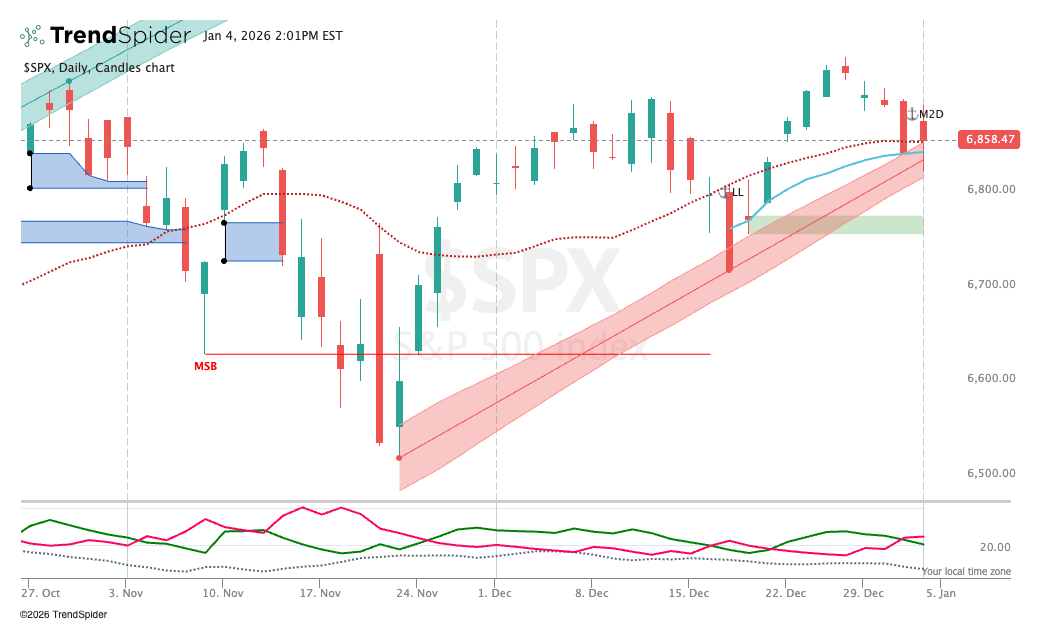
When the market fails to perform during this period, the data for the following year is notable.
What Happens After a Weak October to January
Looking at the ten worst historical instances:
- 6 out of 10 years (60%) posted negative full year returns
- All six negative years saw losses of 10% or more
- Only 2 of the 10 produced significant gains (9% and 14%)
- The remaining years were flat to slightly negative
The January Barometer
January alone also carries predictive weight:
- Down January → negative full year returns 54% of the time
- Up January → positive full year returns 82% to 89% of the time
- Average return after a down January: 2.2%
- Average return after an up January: 15.5%
The Takeaway
A weak October to January period suggests underlying market forces may be struggling. Historically, that weakness tends to persist.
BUT
Remember to trade what you see, not what you think. It's important to be aware of historical trends, but the odds are not zero.